The Best Bays to Buy On Lake Minnetonka: A Bay-by-Bay Guide
8 min read · Published July 2026 · By Bryce Caldwell
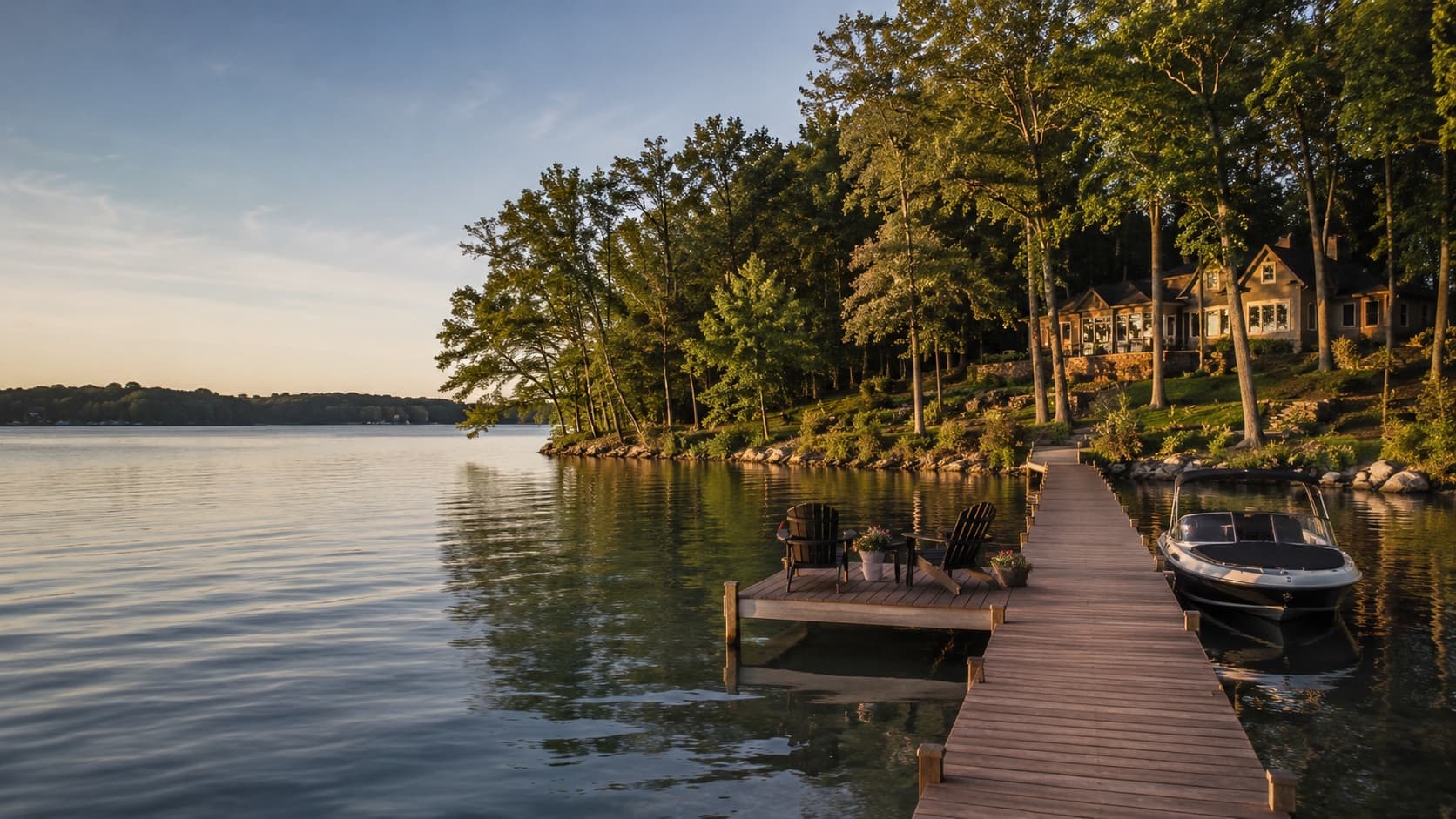
For deep water and strong resale, the best bays to buy on Lake Minnetonka are Lower Lake North (over 90 feet deep), Lower Lake South (over 80 feet), and Smithtown Bay (about 80 feet) — all with high water clarity. For walkability and prestige, Wayzata Bay and Browns Bay command the top price-per-foot. If you want calm water over open-water views, look at the no-wake bays like Carsons, Forest Lake, and Coffee Cove. The right bay depends on which of those three lifestyles you are actually buying.
Which bays are the best to buy on Lake Minnetonka?
The best bay depends on what you value most, but for buyers who care about deep water and resale, three bays lead the lake:
- Lower Lake North — exceeds 90 feet deep with high water clarity; the deepest sought-after water on the lake outside Crystal Bay
- Lower Lake South — exceeds 80 feet deep, also with high clarity
- Smithtown (Smiths) Bay — about 80 feet deep, straddling the Hennepin-Carver county line
For prestige and walk-to-town lifestyle, the leaders are different: Wayzata Bay and Browns Bay command the top price-per-foot on the lake for their reputation and their proximity to downtown Wayzata. On the south side, Excelsior Bay is the walkable, historic counterpart to Wayzata.
And for buyers who want quiet, protected water, the named no-wake and sheltered bays — Carsons Bay, Forest Lake Bay, and Coffee Cove — trade big-water views for calm.
For context, Lake Minnetonka is a 14,528-acre system, Minnesota's ninth-largest lake, with about 125 miles of shoreline and roughly 23 commonly named bays. No two of those bays buy you the same thing.
What actually drives a bay's price premium?
Four things drive the premium on Lake Minnetonka, and none of them is the listing photos: water depth, protection from wake and chop, walkability to a downtown, and buildable shoreline.
Water depth and clarity come first. The lake averages about 30 feet deep and hits a maximum of 113 feet in Crystal Bay, but most bays are far shallower. A bay like Lower Lake North at 90-plus feet holds boats, water quality, and value in a way a shallow, weedy bay never will.
Protection is the second lever. An open-water lot with a wide view also catches wind, wake, and chop all summer. A sheltered bay keeps your dock calm and your shoreline intact — which is why quiet-water buyers often pay up for less view.
Walkability is the third. Being able to walk to dinner, the farmers market, and the docks in downtown Wayzata or Excelsior is rare on this lake, and the market prices that convenience heavily.
Buildable shoreline is the quiet fourth factor. Frontage you can actually put a dock, a lift, and a lawn on is worth more per foot than a steep or marshy edge, even in the same bay.
What does lakefront actually cost, bay by bay?
True lakefront on Lake Minnetonka generally starts near $1 million on the smaller west-end bays, and climbs fast from there depending on the bay and the frontage.
Here are the price anchors I give clients:
- Entry lakefront: starting near $1M on smaller west-end bays
- Premium direct-shoreline homes: roughly $1.8M to $5M-plus
- Trophy tier: premier bays including Smithtown, Browns, and the Big Island area regularly see lakefront sales clearing $10M-plus
- Record tier: the lake's most expensive homes include the Southways estate listed around $54M and Bracketts Point-area estates in the $12M to $17M range
The takeaway is that "lakefront on Minnetonka" spans an enormous range. The bay you choose sets the floor and the ceiling more than any single feature of the house.
Which bays are best for quiet, calm water?
If you want calm water over open-water views, focus on the named no-wake and sheltered bays: Carsons Bay in Deephaven, Forest Lake Bay, and Coffee Cove.
Carsons Bay is a no-wake bay with only a small public ramp (two lanes, 17 trailer spaces), which keeps boat traffic and chop low. That protection is the whole point — you trade the big-water panorama for a dock that stays glassy on a Saturday afternoon.
This matters more every year because of the wake-boat debate. The Lake Minnetonka Conservation District enforces a 5 mph, minimum-wake limit within 300 feet of any shoreline, and a University of Minnesota study found wake boats stir up lakebed sediment unless they run in water at least 20 feet deep. For 2026 the LMCD kept the existing 300-foot wake-boat buffer, declining a push for a stricter 600-foot distance and 20-foot depth minimum.
The practical read: a sheltered, no-wake bay largely sidesteps that whole fight. If wake and chop are what you are trying to avoid, buy where the rules and the geography already protect you.
What makes Browns Bay and the prestige bays special?
Browns Bay is one of the lake's benchmark bays: it spans 696 acres with about 3.7 miles of shoreline and carries an 'A' water-clarity rating from the Minnehaha Creek Watershed District. Clean, big, and close to Wayzata — that combination is why it commands top price-per-foot.
Wayzata Bay is the other prestige anchor, prized for the same walk-to-downtown access that makes Wayzata itself the highest-profile address on the lake. Smithtown Bay rounds out the deep-and-desirable group at about 80 feet, straddling the Hennepin-Carver county line.
Then there is Big Island, off Orono — the lake's signature party anchorage. A typical summer weekend draws around 100 boats tied off around it, and a holiday like the Fourth of July can swell to 400 to 500. Big Island Nature Park occupies 56 acres on the island's east end, on a site that was a Twin City Rapid Transit amusement park in the early 1900s and then the Big Island Veterans Camp from 1923 until 2003.
Living near Big Island means big-water energy and boat-in social access all summer. Whether that reads as a feature or a bug is exactly the kind of trade-off you want to be honest with yourself about before you buy.
How do I choose between a quiet bay, a party bay, and a walk-to-town bay?
Pick the lifestyle first, then the bay — not the other way around. On Lake Minnetonka the three archetypes rarely overlap in one property.
- Deep, quiet bay: Lower Lake North, Lower Lake South, or a sheltered no-wake bay like Carsons. Best water quality and calm; fewer sunset-panorama lots.
- Big-water and social: near Big Island or the open Lower Lake. Maximum boat access and energy; more wake, chop, and holiday traffic.
- Walk-to-town: Wayzata Bay or Excelsior Bay. Restaurants, markets, and docks on foot; top price-per-foot and tighter inventory.
There is no single "best" bay, only the best fit for how you will actually use the water. Once you know whether you are buying quiet, buying access, or buying a walkable downtown, the shortlist of bays writes itself.
Bryce’s take
People fall in love with a view and then spend ten summers fighting the wind and wake that come with it. Before I show anyone a lot, I ask one question: are you buying quiet water, big-water access, or a walk to town? Answer that honestly and the bay picks itself — because on Minnetonka you almost never get all three in the same house.

Key takeaways
- For deep water and resale, Lower Lake North (over 90 feet), Lower Lake South (over 80 feet), and Smithtown Bay (about 80 feet) are the standout bays — all with high water clarity.
- Browns Bay spans 696 acres with about 3.7 miles of shoreline and carries an 'A' water-clarity rating from the Minnehaha Creek Watershed District, driving its top price-per-foot.
- True lakefront generally starts near $1M on smaller west-end bays; premier bays like Smithtown, Browns, and the Big Island area regularly see sales clearing $10M-plus, up to the roughly $54M Southways estate.
- For calm water, buy in a named no-wake or sheltered bay — Carsons Bay (Deephaven), Forest Lake Bay, or Coffee Cove — instead of an open-water lot exposed to wind and wake.
- Big Island off Orono is the lake's party anchorage: a typical summer weekend draws about 100 boats, and the Fourth of July can swell to 400 to 500 boats tied off around it.
Frequently asked questions
What is the best bay on Lake Minnetonka?
How much does a lakefront home on Lake Minnetonka cost?
What are the quietest bays on Lake Minnetonka?
Written by
Bryce Caldwell is a RE/MAX Results agent specializing in the Lake Minnetonka corridor and the Twin Cities west metro. He has shown homes on every street in Wayzata and helps buyers and sellers with honest, hyperlocal guidance.
Explore these areas
- Wayzata, MN real estateWalkable downtown, lake access two blocks from dinner, and the #1 school district in Minnesota.
- Orono, MN real estateWooded acreage and private drives on the north shore. The west metro's quiet ceiling.
- Deephaven, MN real estateOld-growth lanes and dock rights minutes from the channel. Established and quiet.
- Minnetonka, MN real estateMature, leafy, and central — the reliable move-up address with the 276 schools.
Keep reading
More west metro guides
Moving to Eden Prairie, MN — What I Tell Every Relocation Client
The best-value family suburb in the west metro: top-five schools, 130+ miles of trails, and a 20-minute downtown commute — without Wayzata prices.
6 min read · July 8, 2026
Wayzata vs Orono for Families — How I Help Buyers Choose
Two of the most sought-after lake towns, two very different lives. Here's the honest trade-off between walkable Wayzata and private, acreage Orono.
5 min read · June 30, 2026

The Best Bays to Buy On Lake Minnetonka — A Local's Ranking
Lake Minnetonka is really a chain of bays, each with its own price, boat traffic, and feel. Here's how I steer waterfront buyers to the right one.
7 min read · June 18, 2026